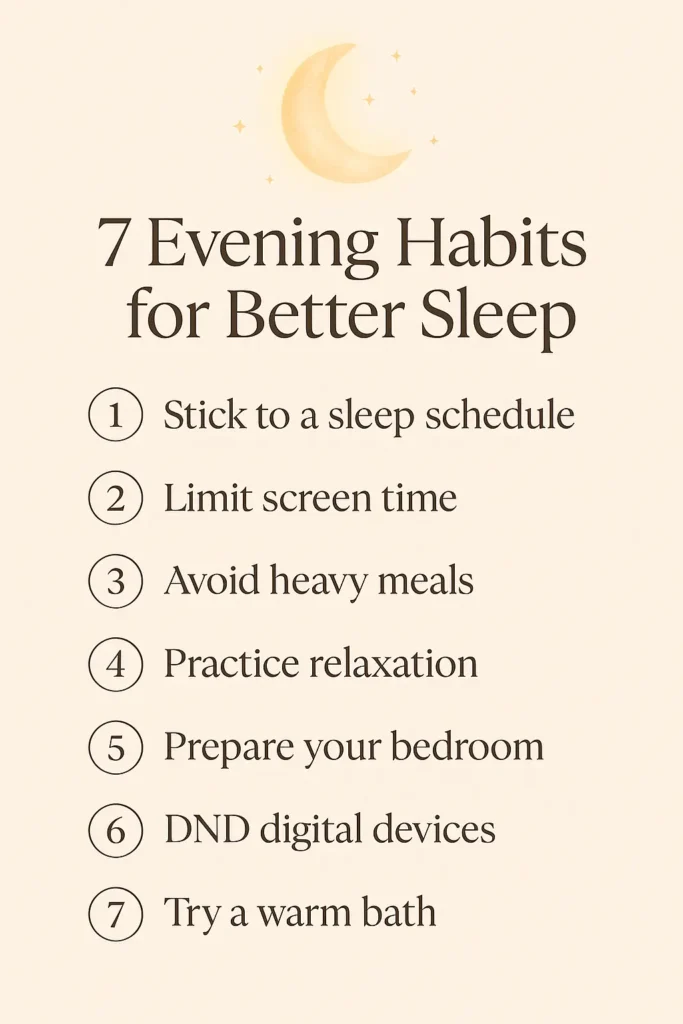

If you struggle to fall asleep quickly or wake up feeling unrested, your evenings may need a calmer rhythm. The goal isn’t perfection — it’s a few simple habits that tell your body, “It’s safe to rest now.” Below you’ll find science-backed, practical steps you can start tonight.
1) Dim the Lights 90 Minutes Before Bed
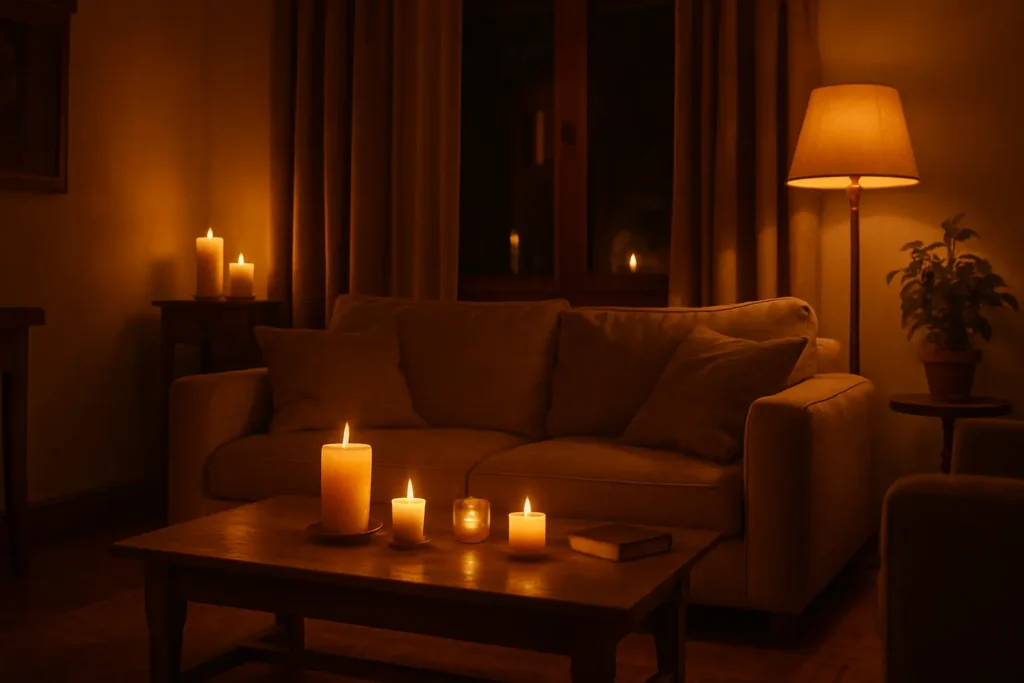
Lowering brightness reduces blue light exposure and helps melatonin rise naturally. Switch to warm lamps or use a warm-tone setting on your devices. Small signal, big effect.
2) Cut Caffeine After 2 PM

Caffeine’s half-life can be 5–7 hours. Even “just one cup” late in the day can fragment sleep. Try herbal tea (chamomile, lemon balm) after lunch to keep your evening calm.
3) Move Gently: 10–15 Minutes
Light stretching, a slow walk, or mobility work lowers muscular tension and quiets the stress response. Think “downshift,” not workout PRs.
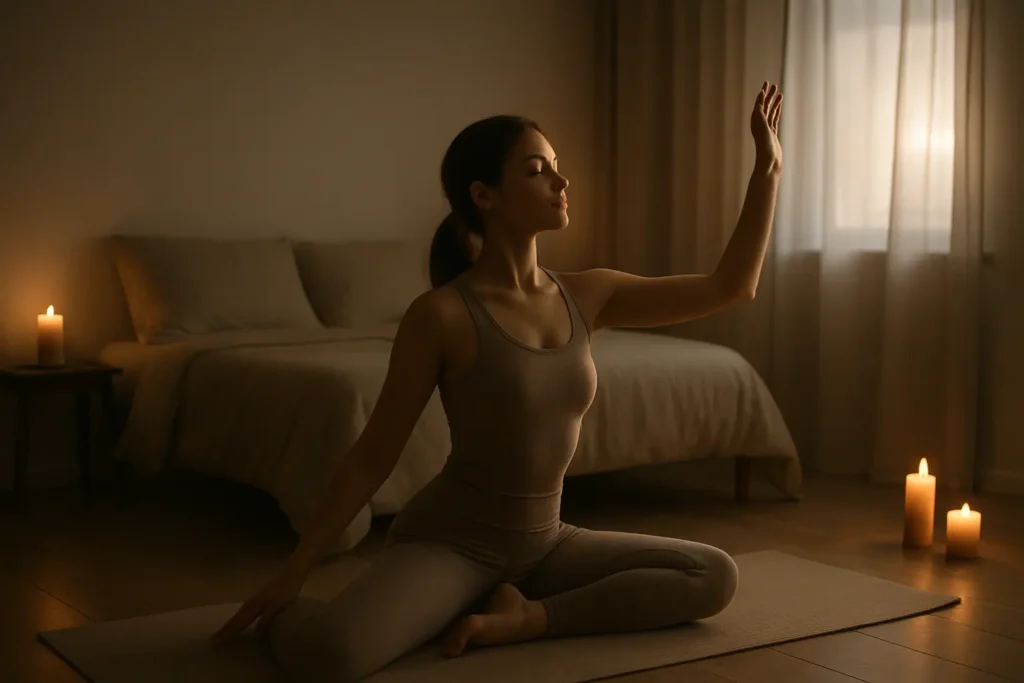
4) Create a Sleep-Boosting Ritual
Instead of relying on supplements, build a small nightly ritual that naturally prepares your body for rest.
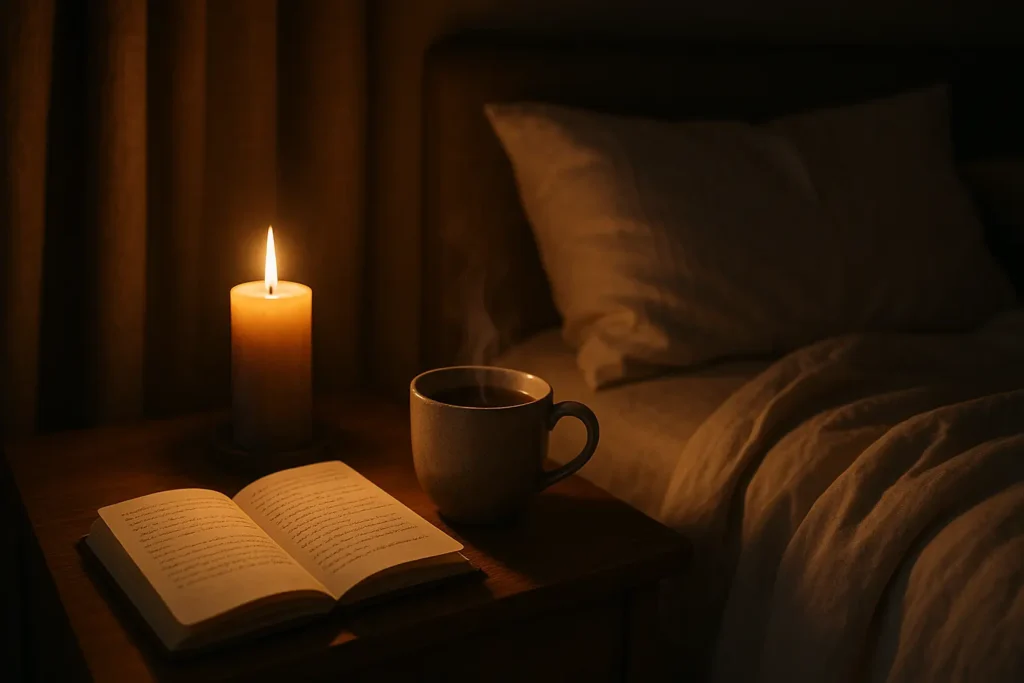
Try journaling for 5 minutes, dimming the lights, and sipping a caffeine-free herbal tea. These small cues train your mind to slow down and help your nervous system relax — no pills needed.
Consistency is what matters most — when your body expects calm, sleep comes easier.
5) Screen-Free Buffer (30 Minutes)
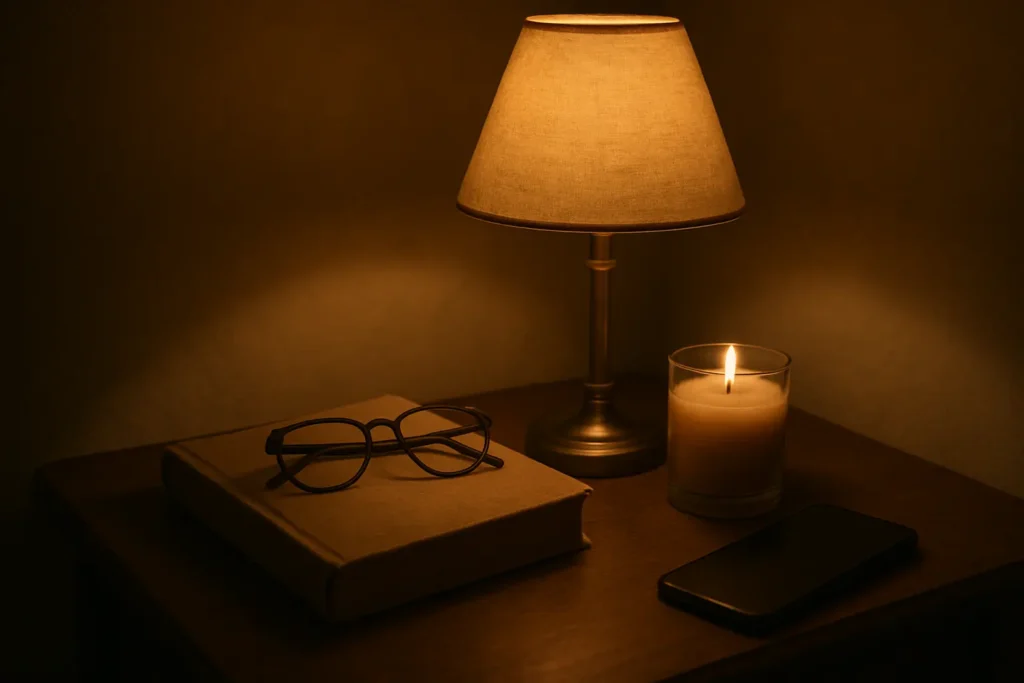
Give your brain a clear runway to sleep. Read a few pages, journal, or try a 4-7-8 breathing cycle. This tiny buffer prevents “doom-scroll arousal.”
6) Consistent Lights-Out Window
Pick a realistic range (e.g., 23:00–23:30) and stick to it. Your circadian rhythm loves predictability more than strict rules. Consistency beats intensity.
7) Light, Early Dinner
Heavier meals too late can raise body temperature and disrupt deep sleep. Favor protein + veggies + healthy fats at dinner; leave spicy or sugary foods for earlier in the day.
Bonus: Evening Mini-Routine (10 Minutes)
- Dim lights > brew herbal tea
- 2 minutes of neck/shoulder mobility
- Write tomorrow’s top 3 tasks (park the brain)
- 4-7-8 breathing × 3 rounds
Tip: If keto or lower-carb, consider a small portion of electrolytes in the evening (magnesium / potassium) to reduce night cramps and restlessness.
Need a gentle, natural nudge toward deeper sleep?
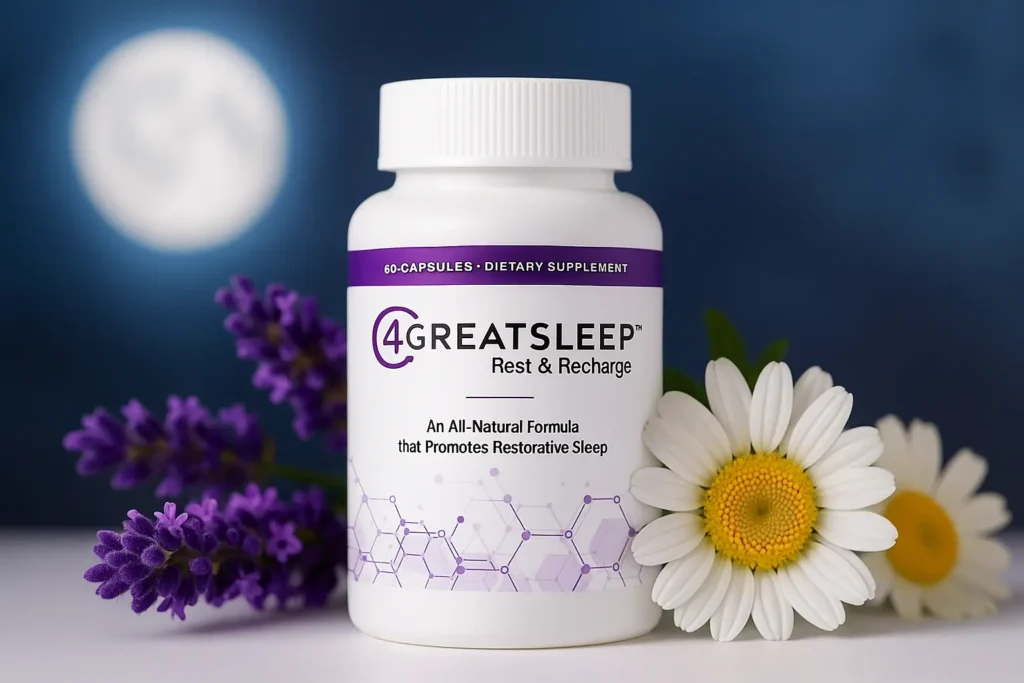
🌙 Discover a natural way to support deeper, more restful sleep →
(Affiliate link – we may earn a small commission at no extra cost to you.)
Related Reads
FAQs
Does magnesium really help with sleep?
Many sleepers report fewer awakenings and calmer muscles with consistent magnesium (e.g., glycinate). As always, check with your healthcare provider.
How long before bed should I stop screens?
Aim for at least 30 minutes. Sensitive sleepers benefit from 60–90 minutes of warm light and no scrolling.
What if I wake up at 3 a.m.?
Stay low-light, sip water, try slow nasal breathing, and avoid clocks. If you’re wide awake after ~15 minutes, read a few pages under a warm lamp.

Elena Hartwell is a wellness educator specializing in sleep optimization, metabolic health, and natural weight management. After years of struggling with exhaustion and unexplained weight gain despite “doing everything right,” Elena discovered the powerful connection between sleep quality, gut health, and metabolism—a breakthrough that transformed her life and inspired her mission. Today, she translates cutting-edge research into simple, actionable strategies that help readers sleep better, lose stubborn weight naturally, and reclaim their energy. Elena’s evidence-based approach has helped thousands break free from the diet-exercise cycle by addressing the root cause: disrupted sleep and metabolic dysfunction.