You’ve tried everything: cutting dairy, eliminating gluten, drinking more water, eating smaller meals. Nothing works. The bloating keeps coming back, day after day.
Here’s what doctors don’t tell you: The bacteria living in your gut control whether you feel flat and comfortable or bloated and miserable—and most people have the WRONG bacteria dominating their digestive system.
The Gut Bacteria Imbalance Nobody Talks About
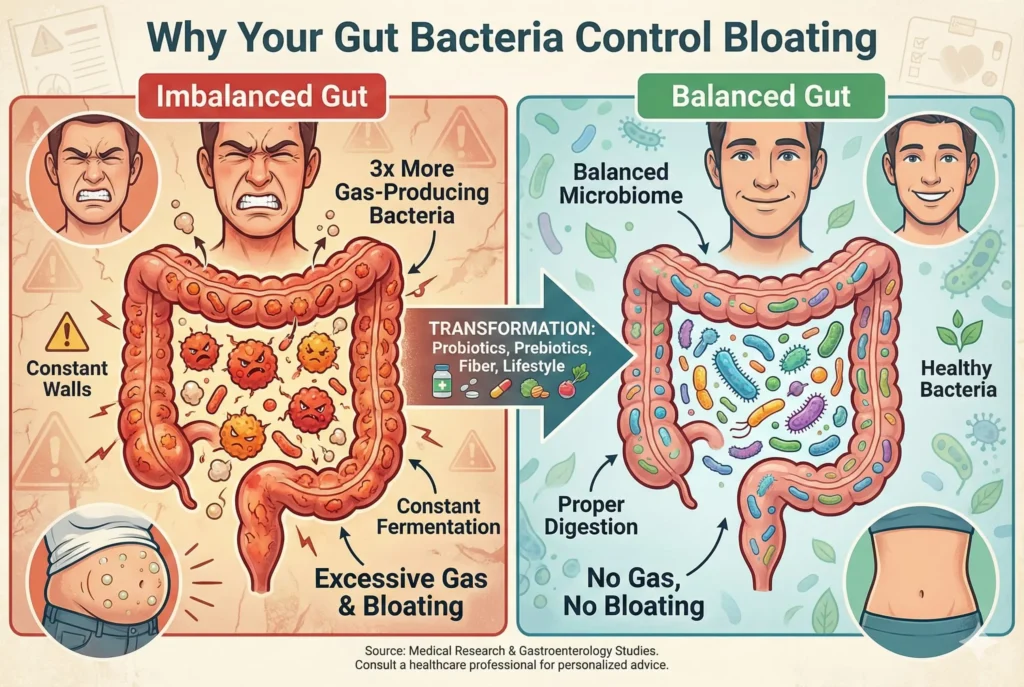
Your digestive system contains trillions of bacteria—some help digestion, others produce excessive gas and cause inflammation. When the WRONG bacteria outnumber the good ones, bloating becomes inevitable.
Research shows that people with chronic bloating have a completely different gut bacteria composition than people who never bloat. The difference? Gas-producing bacteria dominate their digestive system.
The Three Types of “Bloat Bacteria” Making You Miserable
1. Gas-Producing Bacteria (Clostridium, certain E. coli strains)
These bacteria ferment undigested food in your intestines, producing hydrogen and methane gas. The more of these bacteria you have, the more gas builds up—causing that tight, distended belly feeling by afternoon. Discover why you wake up bloated every morning.
2. Inflammatory Bacteria (Certain Firmicutes strains)
These bacteria trigger low-grade inflammation in your intestinal lining. Inflamed intestines retain water, slow digestion, and create that “puffy” feeling even when you haven’t eaten much. This inflammation also disrupts the gut barrier, allowing toxins to leak into your bloodstream—causing systemic bloating.
3. Slow-Digestion Bacteria
When harmful bacteria outnumber beneficial ones, gut motility slows dramatically. Food sits in your digestive tract longer than it should, fermenting and producing even MORE gas. You feel backed up, uncomfortable, and constantly bloated. Learn how exhaustion slows your entire digestive system.
Why “Anti-Bloating” Diets Don’t Work
You’ve probably tried cutting out “bloating foods”—beans, broccoli, dairy, gluten. And maybe it helped slightly, or maybe it didn’t help at all.
Here’s why: The problem isn’t the food you’re eating—it’s the bacteria fermenting that food.
People with healthy, balanced gut bacteria can eat beans, dairy, and fibrous vegetables WITHOUT bloating. Why? Because their beneficial bacteria break down these foods properly, producing minimal gas.
But when gas-producing bacteria dominate, EVERYTHING you eat gets fermented into gas—even “safe” foods like rice, chicken, and salad.
The Stanford Study That Changes Everything
Stanford University researchers studied people with chronic bloating and discovered something shocking: their gut bacteria profiles were completely different from non-bloaters.
Bloated participants had:
- 3x more gas-producing bacteria (Clostridium, certain Proteobacteria)
- 50% fewer anti-inflammatory bacteria (Lactobacillus, Bifidobacterium)
- Significantly slower gut transit time (food sitting 12+ hours longer)
When researchers rebalanced their gut bacteria with specific Lactobacillus and Bifidobacterium strains, bloating decreased by 40-60% within 4-8 weeks—WITHOUT changing their diet. Discover how gut bacteria also control your weight.
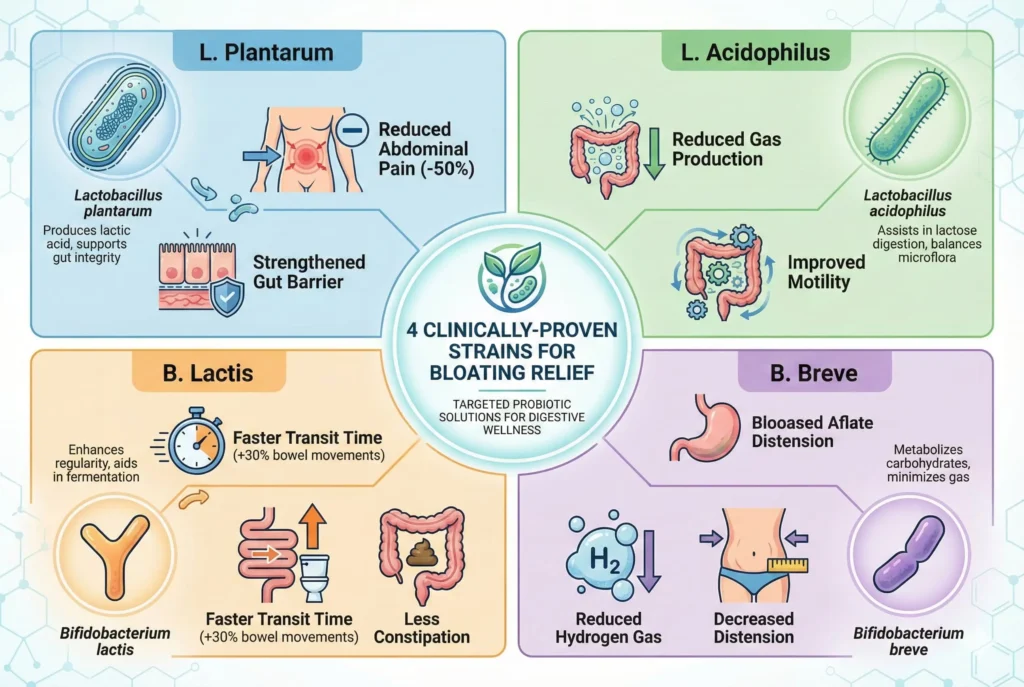
The 4 Probiotic Strains That Actually Stop Bloating
Not all probiotics help with bloating. Most contain random bacteria strains that do nothing for gas or inflammation. But clinical research has identified four specific strains that dramatically reduce bloating:
1. Lactobacillus Plantarum
This strain reduces abdominal pain and bloating by up to 50% within 4 weeks. It works by crowding out gas-producing bacteria and strengthening the intestinal barrier, preventing inflammation.
2. Lactobacillus Acidophilus
One of the most well-studied strains for digestive health, L. Acidophilus breaks down lactose (preventing dairy-related bloating), reduces gas production, and improves overall gut motility. Studies show it can reduce bloating frequency by 40%.
3. Bifidobacterium Lactis
This strain specifically targets constipation-related bloating by speeding up transit time. Research shows it increases bowel movement frequency by 30%, helping food move through your system before it ferments into gas. Pair this with metabolism-boosting coffee for maximum digestive support.
4. Bifidobacterium Breve
B. Breve reduces hydrogen gas production directly—one of the main gases causing bloating. It also decreases abdominal distension (visible swelling) within 2-4 weeks.
When these four strains are combined, they create a synergistic effect—rebalancing gut bacteria, reducing gas production, calming inflammation, and speeding up digestion simultaneously.
How to Rebalance Your Gut Bacteria for a Flat, Comfortable Belly
You can’t starve out bloat-causing bacteria—they’re incredibly resilient. The ONLY solution is to flood your gut with beneficial bacteria that crowd them out naturally.
Introducing LeanBiome: The 9-Strain Gut Rebalancing Formula
LeanBiome contains all four clinically-proven anti-bloating strains PLUS five additional beneficial bacteria that work together to:
- Reduce gas production by replacing gas-producing bacteria with beneficial strains
- Calm intestinal inflammation that causes water retention and puffiness
- Speed up digestion so food doesn’t sit and ferment
- Strengthen gut barrier preventing toxin leakage and systemic bloating
Plus, LeanBiome includes Greenselect Phytosome—a green tea extract that enhances probiotic absorption by 2000%, ensuring the bacteria actually reach your intestines alive and active.
Try LeanBiome risk-free and finally stop chronic bloating.
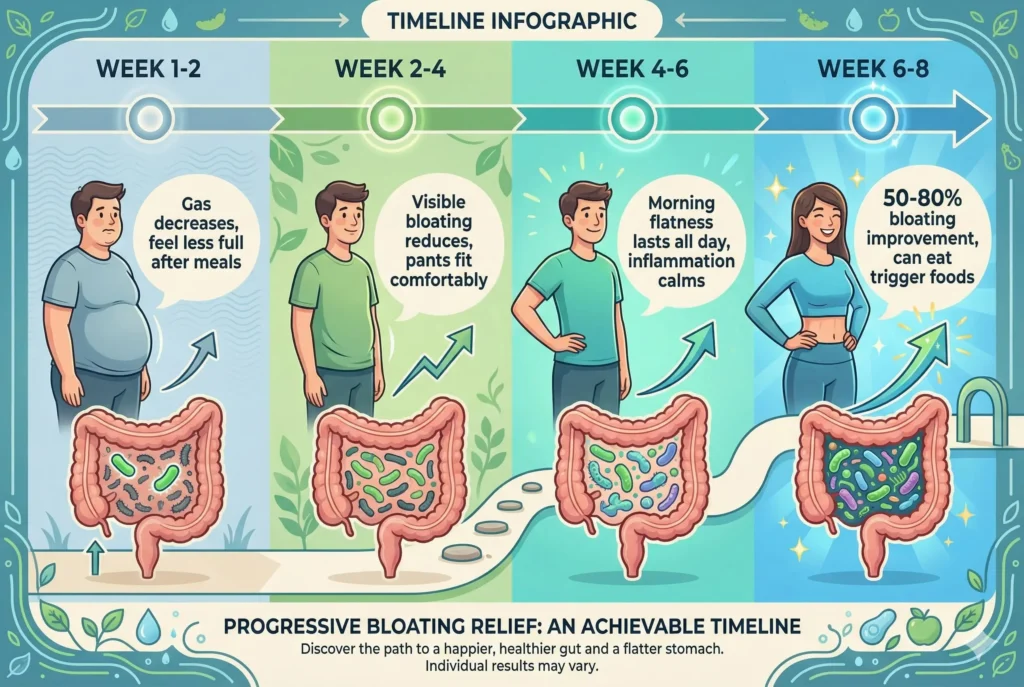
What Happens When You Rebalance Your Gut Bacteria
Within 2-8 weeks of taking the right probiotic strains daily:
- Week 1-2: Gas production decreases noticeably, you feel less “full” after meals
- Week 2-4: Visible bloating reduces, pants fit comfortably all day, digestive sounds quiet down
- Week 4-6: Bowel movements normalize, morning flatness lasts all day, inflammation calms
- Week 6-8: Chronic bloating is 50-80% improved, you can eat formerly “trigger foods” without discomfort
You’re not avoiding foods anymore. Your gut bacteria are finally working WITH you instead of against you. Also discover why you might be gaining weight overnight.
Real Results from Gut Rebalancing
Jennifer, 38: “I was bloated EVERY SINGLE DAY for 3 years. Within 4 weeks of taking LeanBiome, the bloating was 80% gone. I can finally wear fitted clothes without looking pregnant by lunch.”
David, 52: “My stomach was constantly distended and uncomfortable. Two months on LeanBiome and I feel normal again. The gas, the bloating, the discomfort—all gone.”
The Bottom Line
You can’t eliminate bloating by avoiding foods. You can’t out-drink it with more water. You can’t massage it away or exercise it off.
Chronic bloating happens because the WRONG bacteria dominate your digestive system—producing excessive gas, triggering inflammation, and slowing digestion.
The only sustainable solution is rebalancing your gut microbiome with clinically-proven probiotic strains that crowd out bloat-causing bacteria naturally.
Try LeanBiome today and transform your gut from bloated and uncomfortable to flat and healthy. Also learn how blood sugar affects digestive comfort.
Frequently Asked Questions
Can gut bacteria really cause chronic bloating?
Yes. Stanford research shows people with chronic bloating have 3x more gas-producing bacteria and 50% fewer anti-inflammatory bacteria than non-bloaters. When gas-producing bacteria dominate, they ferment food into hydrogen and methane gas, causing constant bloating regardless of diet.
How do I know if my gut bacteria are causing my bloating?
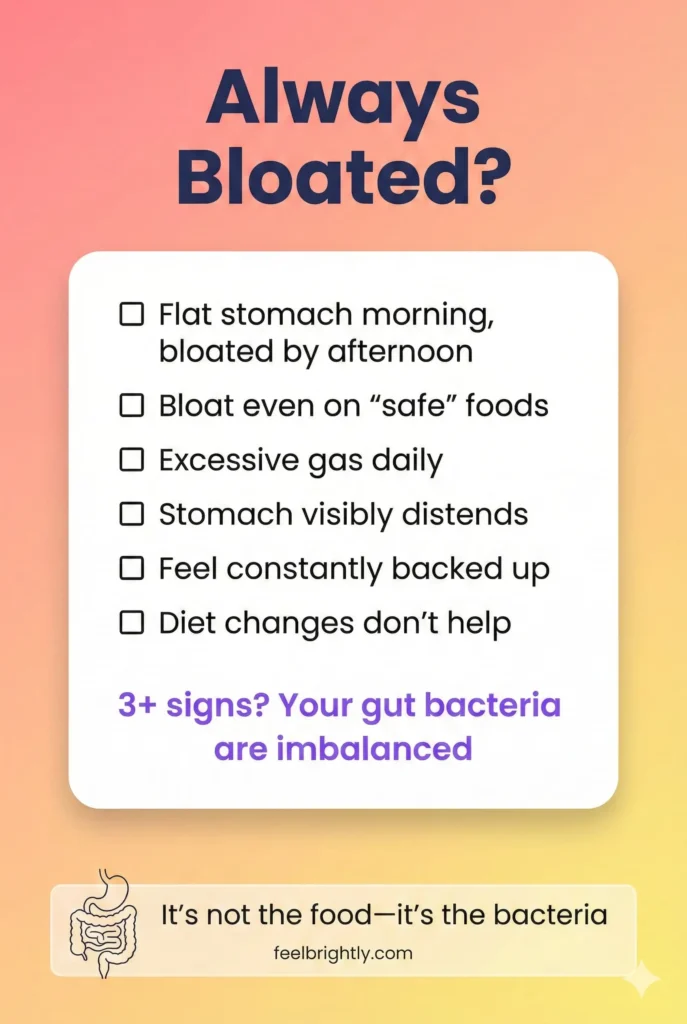
Signs include: bloating gets worse throughout the day, you bloat even when eating “safe” foods, you experience excessive gas, your stomach visibly distends after meals, you feel constantly backed up, and dietary changes don’t help.
What is LeanBiome?
LeanBiome contains 9 clinically-proven probiotic strains including Lactobacillus Plantarum, Acidophilus, Bifidobacterium Lactis, and Breve—all shown to reduce bloating, gas, and inflammation. Plus Greenselect Phytosome for 2000% better probiotic absorption.
How long before bloating improves?
Most people notice reduced gas within 1-2 weeks, visible bloating decreases by week 3-4, and chronic bloating improves 50-80% within 6-8 weeks as gut bacteria rebalance.
Why don’t regular probiotics help my bloating?
Most probiotics contain random strains not proven for bloating. Only specific strains like L. Plantarum, L. Acidophilus, B. Lactis, and B. Breve have clinical research showing they reduce gas production, calm inflammation, and improve gut motility.
Can I eat “bloating foods” after rebalancing my gut?
Yes! Once beneficial bacteria dominate, they properly break down beans, dairy, fibrous vegetables, and other foods WITHOUT producing excessive gas. The problem was never the food—it was the bacteria fermenting it.

Elena Hartwell is a wellness educator specializing in sleep optimization, metabolic health, and natural weight management. After years of struggling with exhaustion and unexplained weight gain despite “doing everything right,” Elena discovered the powerful connection between sleep quality, gut health, and metabolism—a breakthrough that transformed her life and inspired her mission. Today, she translates cutting-edge research into simple, actionable strategies that help readers sleep better, lose stubborn weight naturally, and reclaim their energy. Elena’s evidence-based approach has helped thousands break free from the diet-exercise cycle by addressing the root cause: disrupted sleep and metabolic dysfunction.