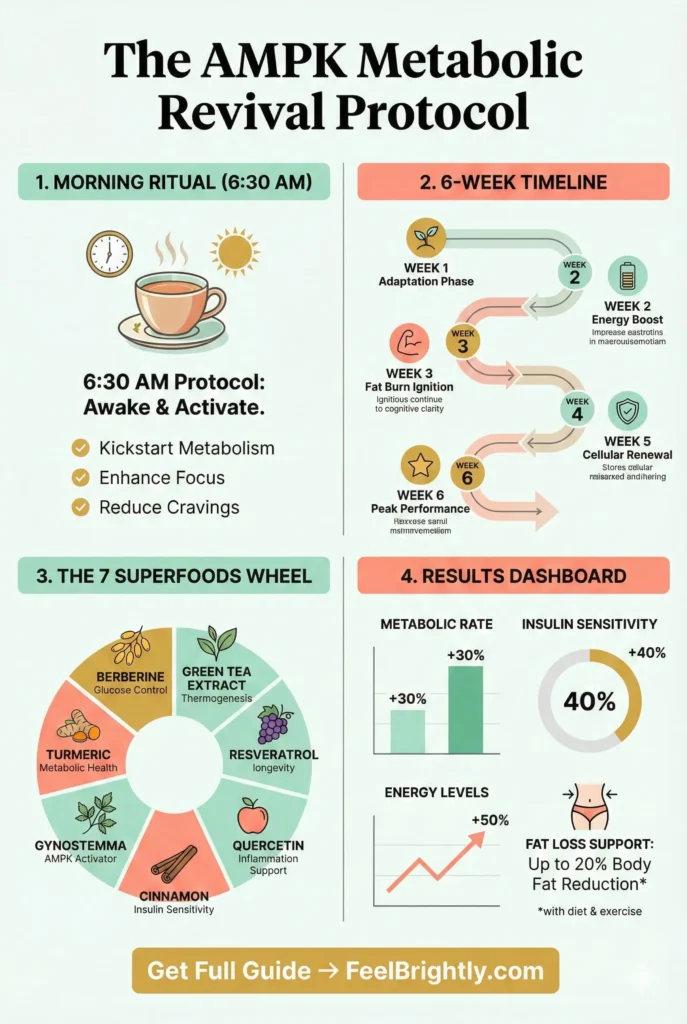

Not because I found some magical 5 AM routine.Because I finally fixed the ONE thing that was quietly sabotaging everything else.Let me back up.Three years ago, my mornings looked nothing like this.
I’d wake up puffy, bloated, and exhausted — no matter how much I slept.My first thought: “Coffee. NOW.”
My second thought: “How is it possible to wake up MORE tired?”By noon? One slice of bread and I’d feel like my stomach doubled.
By 2 PM? I’d need another coffee just to function.
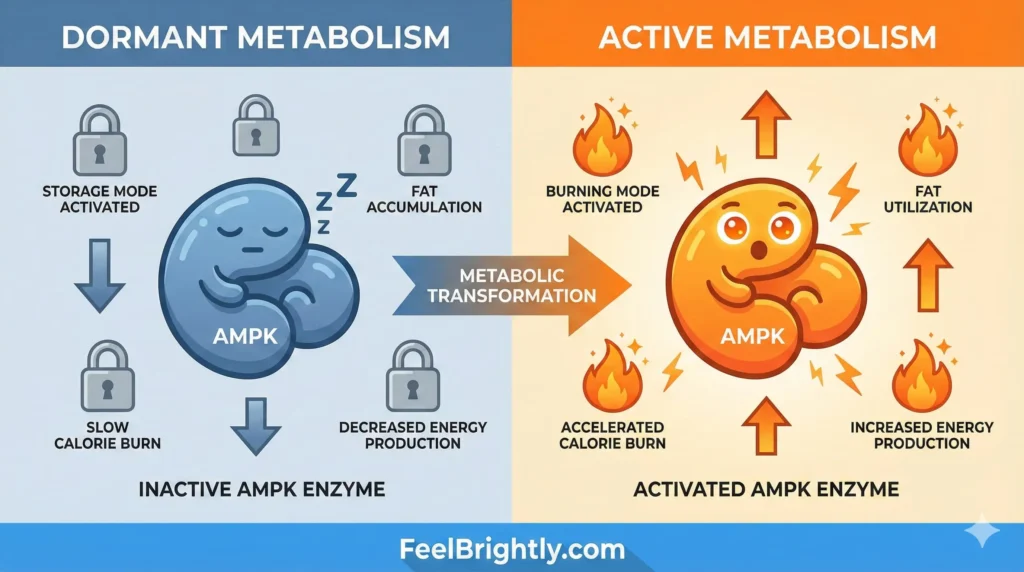
By 8 PM? Too tired to do anything but scroll my phone.Sound familiar?Here’s what I didn’t understand back then:Your body has an internal “energy sensor” called AMPK (AMP-activated protein kinase).
It helps regulate how your cells use fuel (and how efficiently your body responds to food, movement, sleep, and stress).
When AMPK signaling is working well, many people report steadier energy, fewer cravings, and easier body composition progress.
When it’s not, it can feel like your body is stuck in “storage mode.”
I spent a lot of money trying to “fix” myself:
→ Keto — quick loss, rebound later
→ Trainer — stronger, still drained
→ Berberine — didn’t tolerate it well
→ Apps and programs — couldn’t sustain them
Then I found a tea blend built around ingredients commonly discussed in AMPK/metabolic research (green tea compounds, berberine-containing botanicals, mate/oolong, and supportive herbs).
Over the next 6 weeks, I focused on one simple goal: support my energy system consistently — instead of jumping from plan to plan.
My personal snapshot (6 weeks):
- Energy: 3/10 → 9/10
- Weight: -8 lbs
- Waist: -3.5 inches
- Sleep: fewer night wake-ups
- Cravings: dramatically reduced
Important: This is my personal experience, not a promise of results. Individual outcomes vary based on sleep, diet, stress, medical conditions, and medications.
Want to know exactly what I did? Let me walk you through it.
For three years, I blamed everything:
- Not sleeping enough ✓ (guilty)
- Eating too close to bedtime ✓ (guilty)
- Drinking too much coffee ✓ (4 cups daily)
- “Damaged mitochondria” ✓ (maybe?)
- Gut imbalance ✓ (likely)
Turns out? Most of these are symptoms, not root causes.
The real pattern I kept seeing was something I’ll call metabolic resistance —
when your body stops responding normally to common “good” triggers like sleep, movement, and clean eating.
What’s Happening (Simple, Practical Explanation)
This is why you can do “everything right” and still feel stuck.
It’s not always willpower — it’s often physiology + consistency + recovery.
But here’s where it gets interesting…
The AMPK Support Protocol (And Why a Simple Tea Habit Beat My “Complicated Plans”)

I found Lulutox while researching thermogenic resistance.
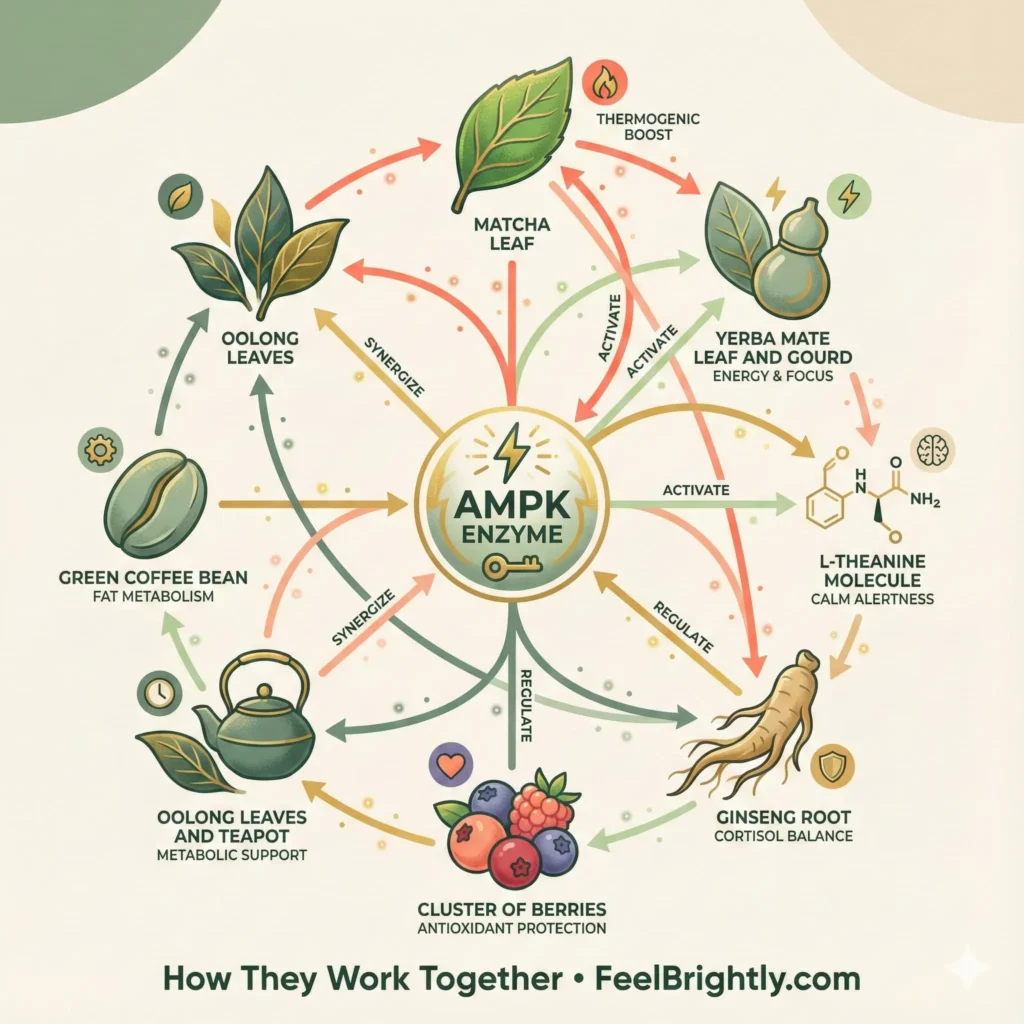
What caught my attention was the ingredient pattern — several compounds that appear frequently in metabolism discussions:
green tea catechins (like EGCG), yerba mate, oolong, and botanical blends traditionally used for digestion and stress support.
Why blends can matter:
Some ingredients may support AMPK-related pathways and appetite/energy regulation through different mechanisms.
A blend won’t “override” your biology — but it can make consistency easier by supporting fewer crashes and cravings.
I’d tried some ingredients separately:
- Matcha → jittery + afternoon crash (caffeine/cortisol notes)
- Berberine → poor tolerance (common for some people)
- Yerba mate → inconsistent quality + taste issues
The difference for me was the habit + timing + a gentler routine, not a “magic ingredient.”
How the Ingredients Map to Common Metabolic Goals (Simplified)
| Ingredient | Primary Role (High-Level) | Why It Matters | Related Reading |
|---|---|---|---|
| Matcha / Green Tea (EGCG) | Metabolic signaling support | Often discussed in fat oxidation + energy regulation pathways | Thermogenic activation |
| Yerba Mate | Appetite/energy support | May support satiety signals for some people | Appetite regulation |
| Oolong Tea | Metabolic flexibility support | Commonly studied for post-meal metabolism effects | Blood sugar patterns |
| Goji Berries | General antioxidant support | Often included in wellness blends for cellular support | Mitochondrial health |
| Milk Thistle | Liver support (traditional use) | Liver health can influence energy and digestion comfort | — |
| Ginseng | Stress resilience support | May help with fatigue patterns and recovery | Cortisol management |
| Dandelion + Nettle | Water balance support | Some people notice less “puffiness” early on | Morning bloating |
Key point: I’m not claiming a “300% AMPK boost” or pharmaceutical-equivalent effects.
The real win was a routine I could actually sustain — with fewer crashes that usually derailed me.
The 6-Week Protocol: What Actually Changed (My Tracking)

Ground Rules (So I Didn’t Fool Myself)
- ✓ Kept my diet broadly similar (no extreme plan)
- ✓ Kept workouts similar (3×/week strength training)
- ✓ One main change: 2 cups/day tea habit
- ✓ Tracked: weight, waist, energy, sleep, cravings
- ✓ If you have medical conditions/medications: talk to a clinician first
I wanted to reduce “new plan placebo” as much as possible.
Weeks 1–2: Small Shifts (Easy to Ignore)
Weight: 167 → 166 lbs (-1 lb)
Waist: 33″ → 32.5″ (-0.5″)
Energy: 3/10 → 5/10 (+2 points)
Sleep: waking 3–4× → waking ~2× (improving)
Day 5: “Less bloated. Pants fit better. Scale barely moved.”
Day 10: “No afternoon crash. Didn’t think about coffee at 2 PM.”
My takeaway: Early wins showed up as energy + less puffiness — not dramatic scale changes.
If you’re tracking, measure your waist too (not just weight).
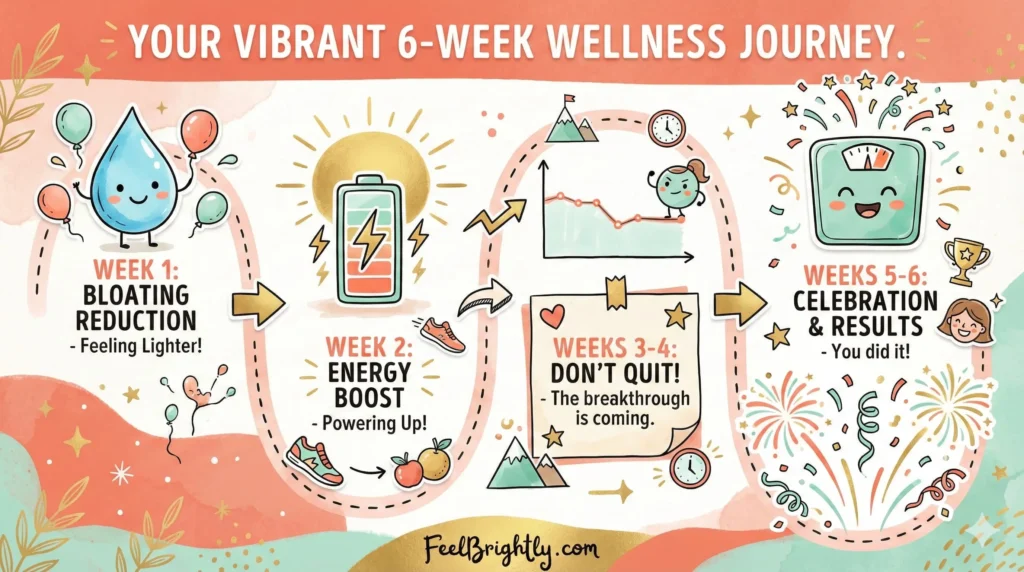
Weeks 3–4: The Plateau Phase (Where People Quit)
Weight: 166 → 165 lbs (-1 lb)
Waist: 32.5″ → 32″ (-0.5″)
Energy: 5/10 → 7/10 (+2 points)
Sleep: waking ~2× → often sleeping through (breakthrough)
Day 18: “Scale stuck. But sleep is unreal.” (sleep + weight patterns)
Day 25: “People noticed change even though scale barely moved.”
Why plateaus happen: water balance, glycogen shifts, recovery changes, and measurement noise.
This is why the scale can lie during body recomposition.
Weeks 5–6: The “Oh — It’s Working” Phase
Weight: 165 → 159 lbs (-6 lbs)
Waist: 32″ → 29.5″ (-2.5″)
Energy: 7/10 → 9/10 (+2 points)
Cravings: frequent → minimal (big shift)
Day 35: “Cravings dropped. I forgot lunch once — unusual for me.” (blood sugar + cravings)
Day 42: “Energy felt stable. Digestion calmer.” (gut balance)
Optional: If You Track Labs
If you’re on diabetes, blood pressure, anticoagulant, or psychiatric medications, do not start supplements/herbal blends without clinician guidance.
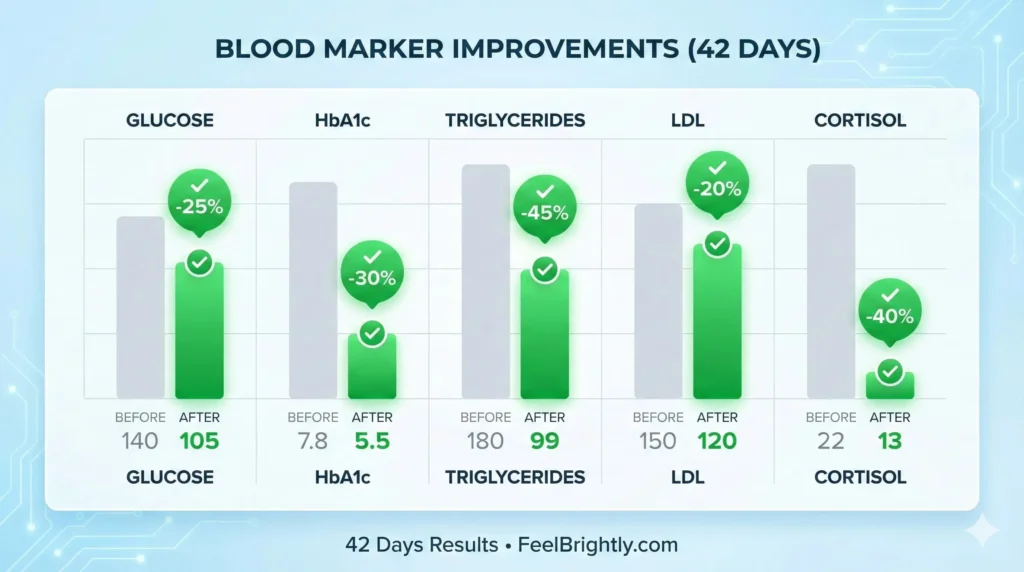
Note: Any lab changes should be interpreted by a qualified clinician. Do not self-diagnose or change meds based on online content.
Final Snapshot (6 Weeks)
Again: personal experience, not guaranteed results.
The Exact Protocol (How I Did It)
Here’s what worked — and what didn’t.
✅ What I Did (The Formula)
Morning Ritual (6:30–7:30 AM)

- Wake up (no snooze if possible)
- Drink water (about 16 oz)
- Steep tea ~5 minutes (avoid over-steeping if you’re sensitive to bitterness)
- Drink slowly over ~10–15 minutes
- Breakfast ~30 minutes later (protein-forward)
Why this timing? Many people find morning routines easiest to keep consistent.
If you wake up puffy, you’ll also like this: morning bloating + sleep connection.
Afternoon Cup (2:00–3:00 PM)
- Second cup (iced or hot)
- Optional: lemon or ginger
- Use it instead of extra coffee
Why this helps: this window is a common crash point.
If caffeine wrecks your sleep, read: coffee, cortisol, and weight patterns.
Evening Rules (Simple but Non-Negotiable)
- No tea after ~4 PM if you’re sensitive to caffeine
- Stop eating 2–3 hours before bed when possible
- Prioritize sleep (sleep + metabolism guide)
Critical: sleep is where recovery happens. If sleep is broken, everything feels harder.
❌ What Didn’t Work (Learn from My Mistakes)
- Tea late in the day: disrupted sleep
- Expecting results in week 1: the body often needs consistency first
- Tracking only weight: measure waist + energy + cravings
- Skipping days often: consistency beats intensity
- “I can eat anything now” thinking: never ends well
🔥 Optional Optimizers (Week 4+)
- Cold exposure: brown fat support
- Fasted easy walk: 20–30 minutes before breakfast (if you tolerate it)
- Protein-forward breakfast: satiety + appetite control
- Gut support: fiber + microbiome basics
Who Should Try This (And Who Shouldn’t)
✅ This May Fit You If:
- You’re 35+ and feel “stuck” despite trying
- You have persistent morning bloating
- You crash at 2–3 PM most days
- You struggle with carb/sugar cravings
- You can commit to 6 weeks of consistency
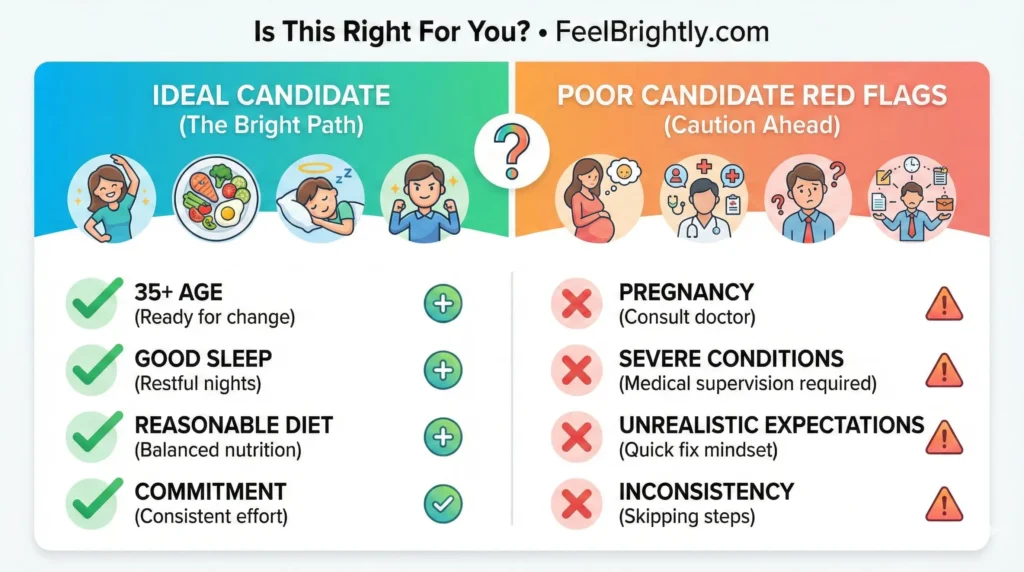
⚠️ Skip / Ask Your Clinician First If:
- Pregnant or breastfeeding
- Severe caffeine sensitivity
- On blood thinners (potential interactions with green tea compounds)
- On diabetes meds (blood sugar may shift)
- Known liver/kidney disease (do not self-supplement)
⚠️ Important: If you take prescription medications (especially diabetes, blood pressure, anticoagulants, or psychiatric meds),
consult a qualified clinician before starting any supplement/herbal blend.
The Real Cost (Clear Math)
Let’s do the math the honest way.
💰 Approximate Cost for a 42-Day Habit
| Item | Cost | Lasts | Daily Cost |
|---|---|---|---|
| Tea (1 bag) | $25.95 | ~15 days (2 cups/day) | ~$1.73/day |
| 42-day habit (3 bags) | $77.85 | ~42 days | ~$1.85/day |
Perspective: many people spend more than this on daily coffee or snacks.
Smart Purchase Strategy (If You Try It)
- Commit to at least 6 weeks if your goal is consistency-based change
- Don’t chase “overnight” outcomes — focus on sleep, cravings, energy, then measurements
- Track: waist + energy + sleep (not just weight)
Disclosure: This is an affiliate link. I may earn a commission at no extra cost to you.
The Reality Check
This is not magic. A tea routine works best when it supports the basics — not replaces them.
🚫 This Won’t Work Well If:
- You sleep 4–5 hours/night: start here: sleep deprivation and metabolism
- You eat ultra-processed most days
- You never move: walking counts
- You’re chronically dehydrated
- You expect “1-week transformation”
✅ What Makes It Work
Think: foundation → structure → optimization.
FOUNDATION
- 7–8 hours quality sleep
- Hydration
- Stress basics
- Whole foods most of the time
SUPPORTING STRUCTURE
- Daily movement
- Protein-forward meals
- Reduce late-night snacking
- Consistent meal timing
OPTIMIZATION
- Tea routine fits here
- Supports consistency
- May help cravings/energy patterns for some people
You can’t build the roof without the walls. You can’t build the walls without the foundation.
Fix basics first, then add the routine.
Lulutox vs. Other Approaches I Tried (Personal Take)
| Approach | Cost | What I Experienced | Notes | Sustainability (for me) |
|---|---|---|---|---|
| Tea routine | $ | Better consistency, fewer crashes | Works best with sleep + diet basics | ⭐⭐⭐⭐⭐ |
| Noom / tracking apps | $$ | Short-term structure | Hard to maintain long-term | ⭐⭐ |
| Keto | $$$ | Fast initial drop | Rebound risk if unsustainable | ⭐ |
| Intermittent fasting | Free | Helped until stress/sleep dipped | Can backfire if sleep worsens | ⭐⭐⭐ |
What This Comparison Shows
- Most expensive ≠ best
- Free ≠ easy if it harms sleep
- Sustainability beats intensity
The Science (Simple + Responsible)
I’m not a clinician. This section summarizes how AMPK is commonly described in metabolism research and why people talk about it in weight management conversations.
What is AMPK? (Simple Version)
AMPK stands for AMP-activated protein kinase.
It helps your cells “sense” energy status and influences pathways related to fuel use, insulin sensitivity, and cellular cleanup (autophagy).
When AMPK is more active:
- Supports fat oxidation
- Supports insulin sensitivity
- Supports mitochondrial biogenesis signals
- Supports cellular maintenance pathways
When AMPK is less active:
- Energy regulation can feel “sluggish”
- Cravings can be harder to manage
- Metabolic flexibility can decline
Important: AMPK is not a “single switch” that explains everything.
Sleep, stress, diet quality, movement, gut health, and medications all matter.
Why “Combination” Can Feel Different
Many blends combine ingredients that touch different parts of the energy/craving/sleep loop.
That doesn’t guarantee results — but it can help some people stay consistent.
Limitations (Be Honest)
- Long-term studies on specific commercial blends are limited
- Individual response varies widely
- Potential interactions exist (especially with blood sugar + anticoagulants)
- No supplement replaces sleep + diet + movement
Questions People Ask
Q: Can I use this if I have diabetes?
A: Talk to your clinician first. Some ingredients may influence blood sugar. Medication adjustments may be needed.
Q: Does it contain laxatives?
A: No “senna detox” style laxatives. Some herbs may have mild water-balance effects.
Q: How fast will I see results?
A: Many people notice comfort/energy changes first. Visible body changes usually require weeks of consistency.
Q: Can I drink more than 2 cups/day?
A: Don’t “more is better” this. If you’re sensitive, start with one cup and assess sleep.
Final Verdict: Should You Try This Routine?
✅ Consider Trying It If:
- You’re consistent with sleep basics (or actively improving)
- You want a simple routine that’s easier than complex plans
- You struggle with cravings/afternoon energy dips
- You can commit to 6 weeks
❌ Skip It If:
- You want “lose 20 lbs in 2 weeks” outcomes
- You’re pregnant/breastfeeding
- You’re on multiple medications and won’t check interactions
- Your sleep is chronically 4–5 hours and you won’t change it
My honest take: this was the first thing that helped me stay consistent long enough to see real momentum.
Not magic. Just a routine I could keep.
If You Want to See the Product I Used
Check current pricing/availability and read the full ingredient list before buying.
Disclosure: Affiliate link. I may earn a commission at no extra cost to you.

Elena Hartwell is a wellness educator specializing in sleep optimization, metabolic health, and natural weight management. After years of struggling with exhaustion and unexplained weight gain despite “doing everything right,” Elena discovered the powerful connection between sleep quality, gut health, and metabolism—a breakthrough that transformed her life and inspired her mission. Today, she translates cutting-edge research into simple, actionable strategies that help readers sleep better, lose stubborn weight naturally, and reclaim their energy. Elena’s evidence-based approach has helped thousands break free from the diet-exercise cycle by addressing the root cause: disrupted sleep and metabolic dysfunction.