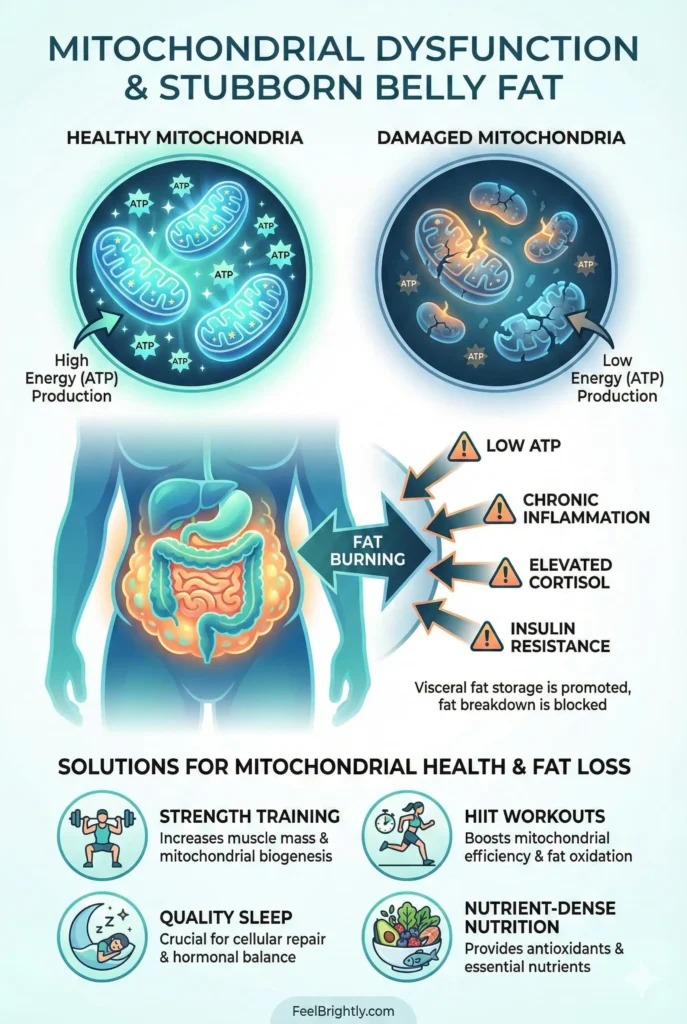
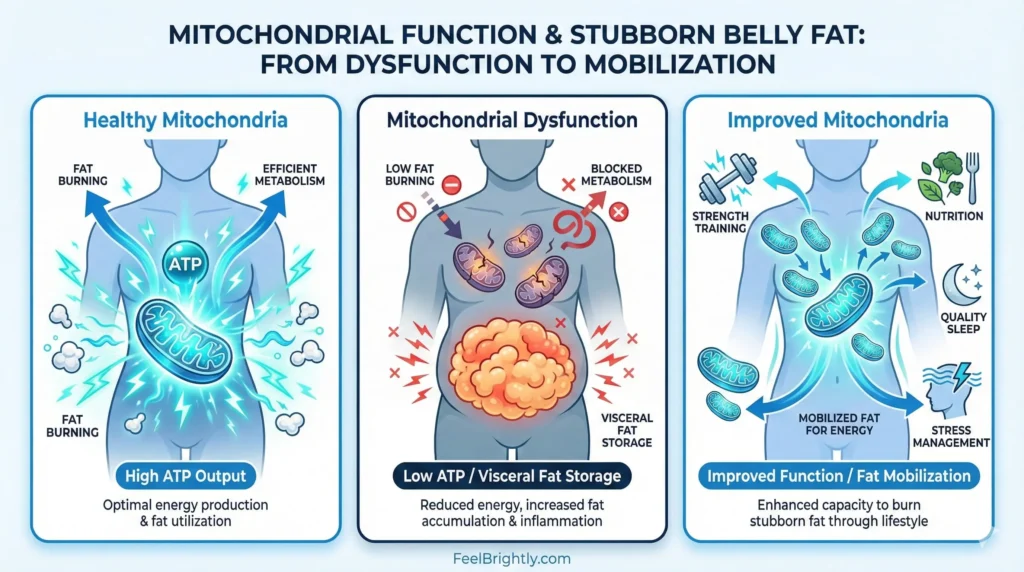
Turns out, belly fat isn’t just about calories in versus calories out. It’s about cellular metabolism. Specifically, your mitochondria—the energy factories inside your cells. When they’re dysfunctional, your body can’t burn fat efficiently, no matter how much you exercise.
Once I fixed my mitochondrial function, the belly fat finally started disappearing. Here’s why it’s not about working out harder—it’s about working smarter at the cellular level.
Why Belly Fat Is Different from Other Fat
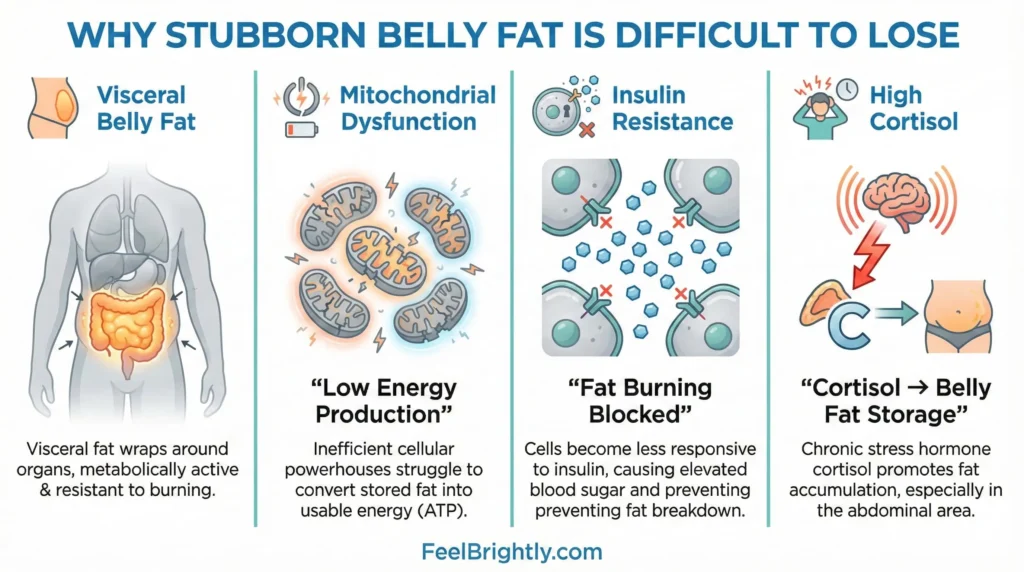
Not all fat is the same. The fat around your belly—visceral fat—behaves differently than subcutaneous fat (the fat under your skin on your arms, legs, and butt).
Visceral fat is metabolically active. It releases hormones and inflammatory compounds that interfere with fat burning. It’s also the last fat to go because it’s stored deep around your organs, not just under the skin.
But here’s what most people don’t know: visceral belly fat is directly linked to mitochondrial dysfunction.
When your mitochondria can’t produce energy efficiently, your body:
– Stores more fat (especially around the belly)
– Burns less fat during exercise
– Struggles to mobilize stubborn fat stores
– Develops insulin resistance (which makes belly fat worse)
This is why you can work out consistently and still keep belly fat. You’re burning some calories, but your cellular machinery isn’t functioning well enough to tap into those stubborn fat stores.
The Mitochondria-Belly Fat Connection
Your mitochondria produce ATP (energy) by burning glucose and fat. When they’re healthy, they efficiently switch between fuel sources. When they’re damaged, they struggle to burn fat—especially visceral fat.
What causes mitochondrial dysfunction:
– Chronic stress (cortisol damages mitochondria)
– Poor diet (processed foods, excess sugar)
– Lack of sleep (mitochondria repair during deep sleep)
– Sedentary lifestyle (mitochondria multiply with movement)
– Aging (mitochondrial function naturally declines after 30)
– Toxins (environmental pollutants damage mitochondria)
The result: Your body defaults to storing fat instead of burning it. Exercise helps, but it can’t fully compensate for broken cellular metabolism.
This is why some people can eat junk food and stay lean, while others eat clean and still struggle. It’s not willpower—it’s mitochondrial efficiency.
Why Exercise Alone Won’t Fix It
I’m not saying exercise doesn’t matter. It does. But if your mitochondria are dysfunctional, exercise alone won’t eliminate stubborn belly fat.
Here’s why:
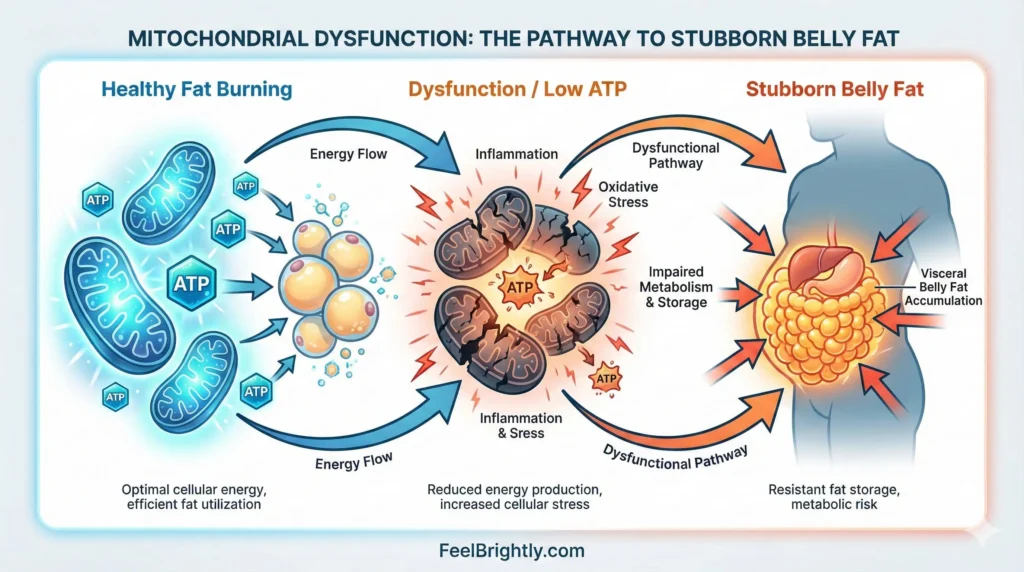
1. You’re burning calories, but not fat. When mitochondria are damaged, your body struggles to access stored fat for energy. Instead, it burns the glucose you just ate and then stops. The belly fat stays untouched.
2. Cortisol from overtraining makes it worse. If you’re doing intense cardio or lifting heavy 6-7 days per week without proper recovery, you’re elevating cortisol. High cortisol damages mitochondria further and signals your body to store more belly fat.
3. Insulin resistance blocks fat burning. Mitochondrial dysfunction leads to insulin resistance. When insulin is elevated, fat burning is impossible—even during exercise. Your body is stuck in fat-storage mode.
This is why some people work out for months and barely lose belly fat. They’re creating a calorie deficit, but their cellular machinery isn’t allowing fat mobilization.
How to Actually Lose Stubborn Belly Fat
The solution isn’t just “eat less and move more.” It’s fixing your mitochondrial function so your body can actually burn fat.
1. Prioritize Strength Training Over Cardio
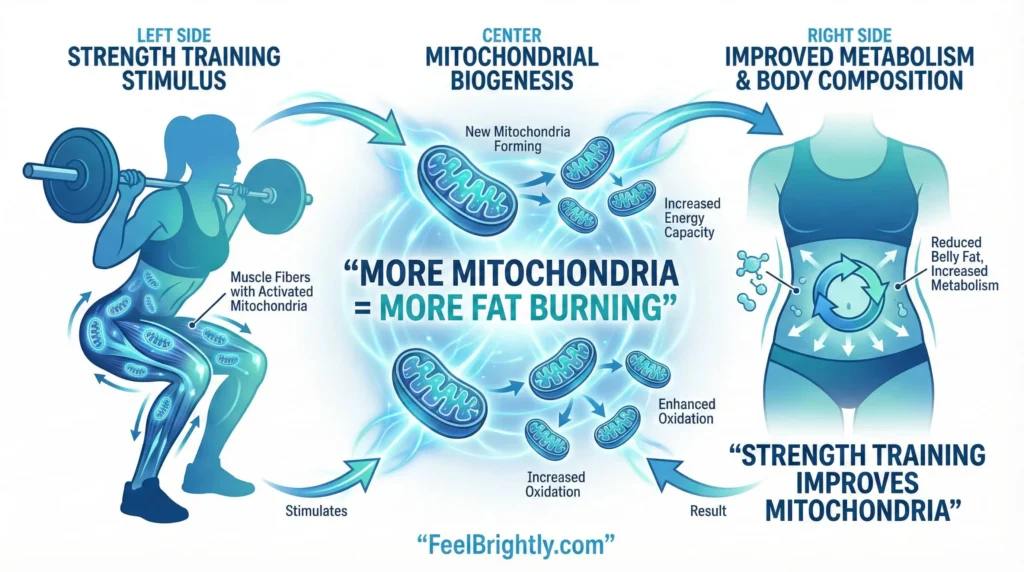
Excessive cardio increases cortisol and can damage mitochondria further. Strength training, on the other hand, builds muscle—which contains more mitochondria.
More muscle = more mitochondria = better fat burning.
Focus on compound lifts (squats, deadlifts, presses) 3-4 times per week. Skip the hour-long treadmill sessions.
2. Use Short, Intense Workouts
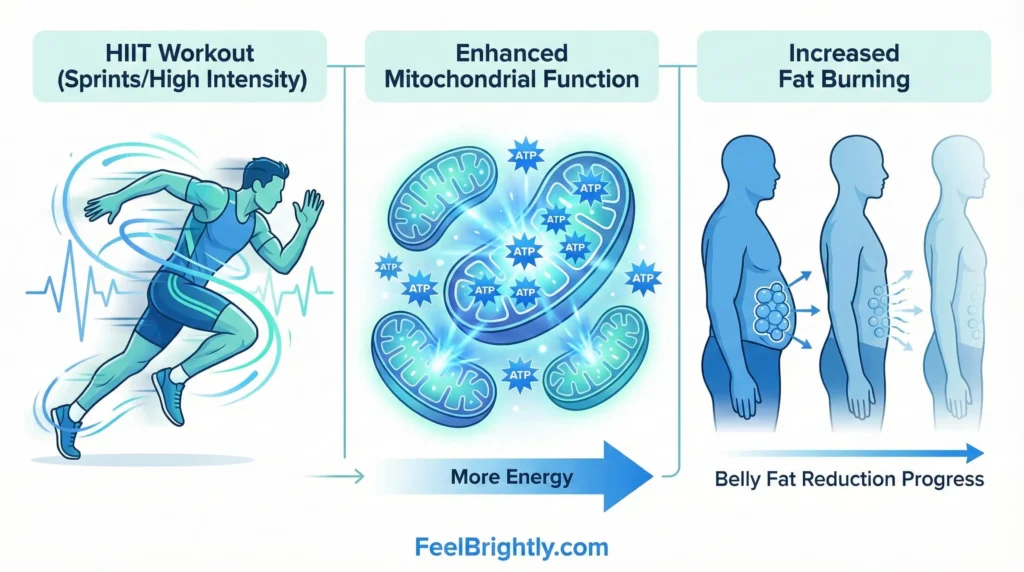
High-intensity interval training (HIIT)—done correctly—improves mitochondrial function. But the key is short bursts, not long cardio sessions.
20-30 minutes of intense work, 2-3 times per week, is enough. Your body needs recovery time to repair and build new mitochondria.
3. Fix Your Diet for Mitochondrial Health
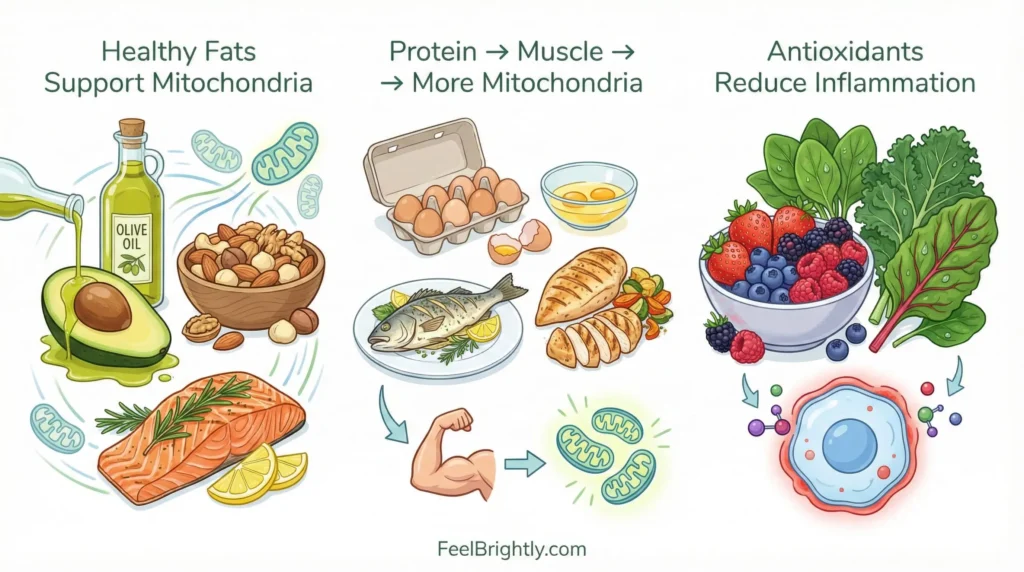
Mitochondria need specific nutrients to function:
– Healthy fats (omega-3s, avocado, olive oil)
– Quality protein (grass-fed meat, wild fish)
– Low-glycemic carbs (vegetables, not bread/pasta)
– Antioxidants (berries, leafy greens)
Cut out processed foods, excess sugar, and seed oils—they damage mitochondria and increase inflammation.
Our keto and mitochondrial health guide covers this in detail.
4. Manage Stress and Cortisol
Chronic stress is one of the biggest mitochondrial killers. If you’re stressed 24/7, no amount of exercise will fix your belly fat.
What helps:
– 7-9 hours of quality sleep (mitochondria repair during sleep)
– Daily movement (walking, not just intense workouts)
– Stress management (meditation, breathwork, or whatever works for you)
Check our sleep quality guide to optimize recovery.
5. Support Mitochondrial Function with the Right Nutrients
Diet alone often isn’t enough, especially if you’ve been damaging your mitochondria for years.
I tried everything—lifting weights, eating clean, managing stress. It helped, but I still had that stubborn lower belly fat that wouldn’t budge.
Then I started taking Mitolyn, a supplement specifically designed to restore mitochondrial function and support fat metabolism.
The formula includes research-backed ingredients that directly target mitochondrial health:
– **CoQ10 (Ubiquinol):** Powers ATP production and helps mitochondria burn fat efficiently
– **PQQ:** Triggers the creation of new mitochondria (more mitochondria = more fat burning)
– **L-Carnitine:** Transports fatty acids into mitochondria so they can be burned for energy
– **Alpha-Lipoic Acid:** Protects mitochondria from oxidative damage
– **Green Tea Extract (EGCG):** Enhances fat oxidation and improves metabolic rate
What I noticed after 60 days: The stubborn belly fat finally started shrinking. Not dramatically, but consistently. I lost 3 inches off my waist over 3 months—without changing my diet or workout routine.
This wasn’t magic. It was my mitochondria finally working properly, allowing my body to access stored belly fat during workouts.
Where to get it: Mitolyn official website. They offer a 180-day money-back guarantee, which is why I felt comfortable trying it.
Important: Supplements aren’t a replacement for exercise and diet. They’re an accelerator. Fix your training, nutrition, and sleep first. Then add mitochondrial support to maximize results.
The 90-Day Belly Fat Protocol
Here’s the exact approach that worked for me:
Exercise (3-4 days/week):
– Strength training: 3 days (compound lifts, 45 minutes)
– HIIT: 1-2 days (20 minutes max)
– Walking: Daily (30-60 minutes, low intensity)
Nutrition:
– High protein (1g per pound of body weight)
– Healthy fats (olive oil, avocado, fatty fish)
– Low-glycemic carbs (vegetables, minimal grains)
– Cut processed foods and seed oils
Recovery:
– 7-9 hours sleep (non-negotiable)
– Stress management (10 minutes daily breathwork or meditation)
– Rest days (at least 3 per week from intense exercise)
Mitochondrial Support:
– Mitolyn (daily, with breakfast)
– Magnesium (400mg before bed)
– Omega-3s (fish oil or algae oil)
Results after 90 days: Lost 3 inches off my waist, down 12 pounds total, visible ab definition for the first time in years.
For more on optimizing your cellular metabolism, read our complete mitochondrial health guide.
Why This Works When Nothing Else Did
Most belly fat protocols focus on calories. Eat less, move more. That works for general weight loss, but not for stubborn belly fat.
Stubborn belly fat is a metabolic problem, not a calorie problem.
When you fix mitochondrial function:
– Your body can actually access belly fat stores during exercise
– Insulin sensitivity improves (fat burning becomes possible)
– Inflammation decreases (visceral fat shrinks)
– Energy production increases (workouts feel easier)
– Cortisol regulation improves (stress-related belly fat reduces)
This is why people who fix their mitochondria often lose belly fat without dramatically changing their diet or exercise. Their body can finally do what it’s supposed to do—burn fat efficiently.
Final Thoughts
If you’ve been working out consistently, eating clean, and still have stubborn belly fat, the problem isn’t effort. It’s cellular metabolism.
Your mitochondria—the tiny energy factories inside your cells—determine whether your body burns fat or stores it. When they’re damaged, no amount of cardio or calorie restriction will eliminate belly fat.
The solution: strength training over excessive cardio, proper nutrition for mitochondrial health, adequate recovery, and targeted support to restore mitochondrial function.
Once your mitochondria work properly, your body can finally access that stubborn belly fat. The results aren’t instant, but they’re consistent. And unlike crash diets or extreme workouts, they’re sustainable.
Your belly fat isn’t stubborn because you’re not working hard enough. It’s stubborn because your cellular machinery needs repair.
Fix the mitochondria, fix the belly fat.

Elena Hartwell is a wellness educator specializing in sleep optimization, metabolic health, and natural weight management. After years of struggling with exhaustion and unexplained weight gain despite “doing everything right,” Elena discovered the powerful connection between sleep quality, gut health, and metabolism—a breakthrough that transformed her life and inspired her mission. Today, she translates cutting-edge research into simple, actionable strategies that help readers sleep better, lose stubborn weight naturally, and reclaim their energy. Elena’s evidence-based approach has helped thousands break free from the diet-exercise cycle by addressing the root cause: disrupted sleep and metabolic dysfunction.