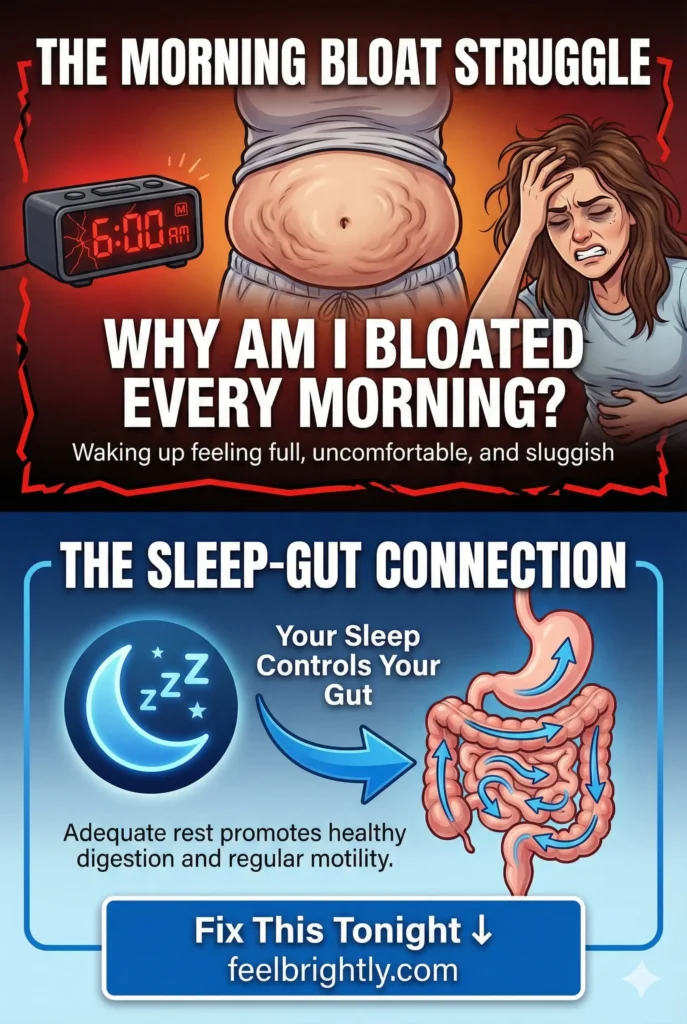

You go to bed feeling fine. But when you wake up? Your stomach looks six months pregnant, your pants won’t button, and you feel backed up and uncomfortable.
You haven’t even eaten breakfast yet. So why are you so bloated in the morning?
If you’re waking up bloated every single day, you’re not alone. Over 74% of women experience morning bloating despite eating clean the night before. And here’s what nobody tells you:
Your bloating isn’t about what you ate yesterday. It’s about how you slept last night.
Harvard sleep researchers discovered that poor sleep slows gut motility by 30%, causing food and waste to sit in your intestines overnight. The result? You wake up bloated, backed up, and uncomfortable—even when your stomach was flat at bedtime.
This article explains the sleep-gut connection, why morning bloating happens, and the science-backed fixes that can flatten your belly in just 3-7 days.
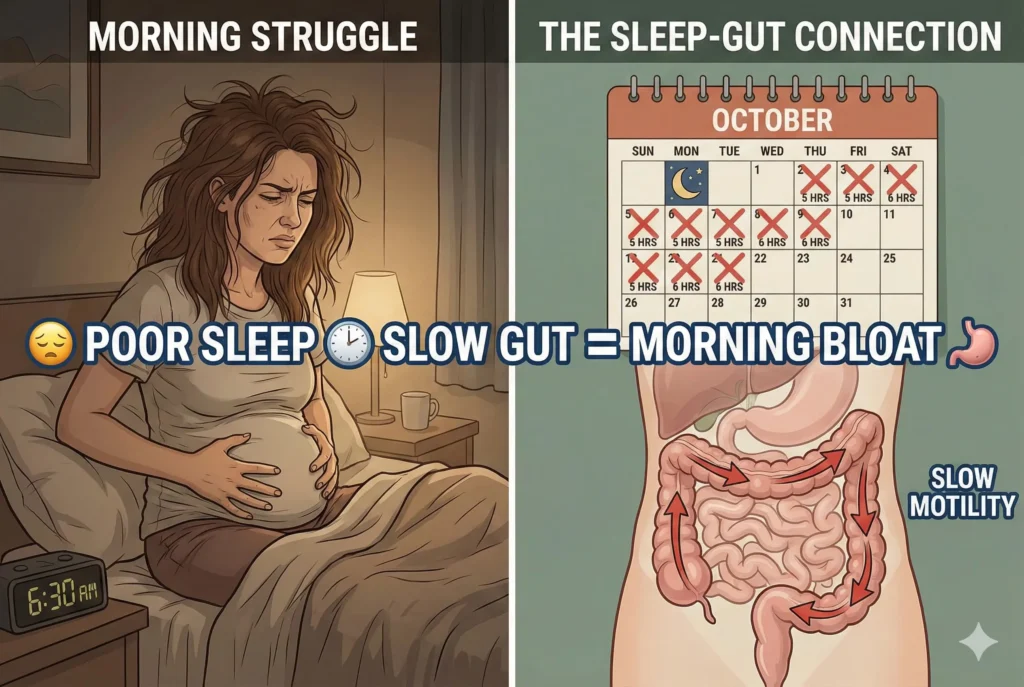
Why Am I Bloated in the Morning? The Sleep-Gut Science
When you don’t sleep well, your digestive system literally slows down. Your gut has its own rhythm—called the “migrating motor complex”—that moves food and waste through your intestines.
But poor sleep disrupts this rhythm, causing morning bloating that makes you look and feel puffy despite doing everything “right” with your diet.
Here’s What Happens When You Sleep Less Than 7 Hours:
- Gut motility drops by 30% – Food moves slower through your system, sitting in your intestines overnight
- Cortisol spikes – Stress hormone slows digestion even more, trapping waste
- Gut bacteria imbalance – Bad bacteria overgrow, causing gas and bloating
- Water retention increases – Your body holds onto fluid, making you look puffy
Translation? Everything you ate yesterday is just sitting in your gut, fermenting, causing gas, and making you look pregnant. This is why you wake up bloated every morning even when you felt fine at bedtime. Learn how your gut and brain are connected.
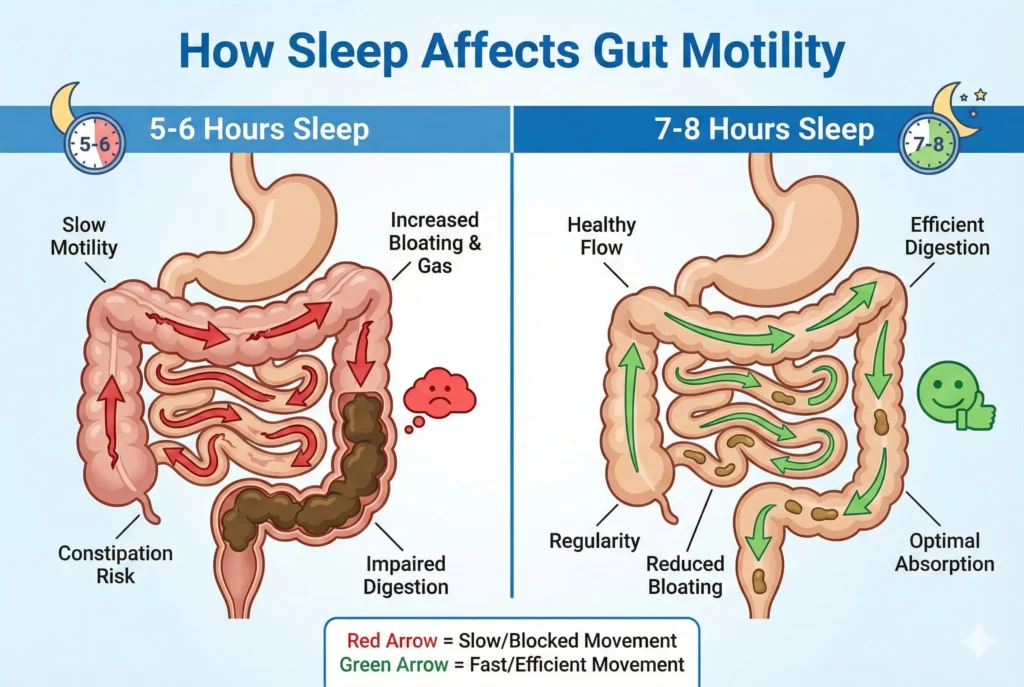
How Poor Sleep Causes Morning Bloating (The 30% Gut Motility Drop)
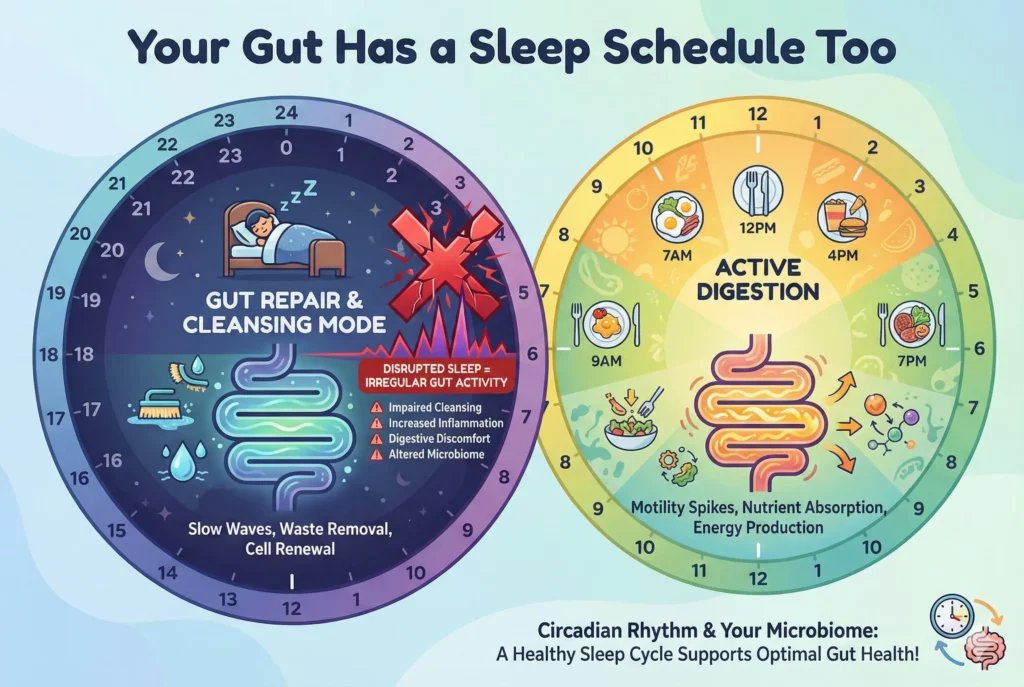
Your digestive system works on a circadian rhythm, just like your sleep cycle. When you mess up your sleep, you mess up your digestion—and that’s when morning bloating becomes inevitable.
Poor Sleep = Constipation = Waking Up Bloated
Studies show that people who sleep less than 6 hours are 2x more likely to experience chronic constipation. Why? Because your gut needs deep sleep to:
- Produce digestive enzymes that break down food
- Move waste through your intestines efficiently
- Balance good and bad bacteria in your microbiome
- Repair gut lining damage from inflammation
Without enough sleep, everything backs up. Food sits in your gut longer, bacteria ferment it into gas, and you wake up bloated, uncomfortable, and backed up—even if your stomach was flat when you went to bed.
Discover why belly bloat is linked to stubborn fat.
The Late-Night Eating Trap That Makes Morning Bloating Worse
When you’re sleep-deprived, ghrelin (your hunger hormone) spikes. You crave carbs and sugar late at night. You eat close to bedtime. Your gut has to digest food while you’re trying to sleep.
Result? Poor digestion, gas, bloating, and terrible sleep—which makes tomorrow’s morning bloating even worse. It’s a vicious cycle.
Morning Bloating vs Evening Bloating: What’s the Difference?
Many people notice their stomach is flat at night but bloated in the morning. This seems backwards—shouldn’t you be MORE bloated at night after eating all day?
Here’s the science:
Evening Bloating (Normal)
- Caused by food volume from meals throughout the day
- Your gut is actively digesting
- Usually reduces as food moves through your system
- Goes away after a bowel movement
Morning Bloating (Problem)
- Caused by stagnant waste that didn’t move overnight
- Your gut motility slowed down during sleep
- Indicates poor sleep quality or gut dysfunction
- Persists even after using the bathroom
If you’re consistently waking up bloated, it’s a red flag that your sleep-gut connection is broken. Learn how cortisol disrupts your sleep and gut.
Does Lack of Sleep Cause Constipation? (Clinical Evidence)
Yes. Multiple clinical studies confirm the sleep-constipation link:
- 2019 Japanese study: Participants sleeping <6 hours had 2.3x higher constipation rates
- Harvard Medical School research: Poor sleep reduces gut motility by 28-34%
- University of Michigan study: Sleep deprivation alters gut microbiome composition within 48 hours
- Johns Hopkins findings: Deep sleep (REM) is when your gut performs 70% of its waste-clearing work
When you don’t sleep, your gut can’t do its job. Waste backs up. Bacteria ferment trapped food. You wake up bloated every morning.
Discover why exhaustion prevents weight loss.
7 Ways to Stop Waking Up Bloated (Science-Backed Fixes)
The solution isn’t more probiotics or cutting out gluten. The solution is fixing your sleep-gut rhythm with these proven strategies:
1. Get 7-8 Hours of Quality Sleep Every Night
This is non-negotiable. Your gut needs deep sleep to:
- Reset gut motility to normal speed
- Balance cortisol levels
- Allow digestive enzymes to work properly
- Clear backed-up waste from your intestines
Learn how to improve your sleep quality naturally.
Try SleepLean—a natural sleep support supplement that helps you fall asleep faster and stay asleep longer, so your gut can function properly overnight without morning bloating.
2. Support Your Gut’s Natural Cleansing Process
Even with better sleep, years of poor digestion can leave your gut backed up with waste. That’s where targeted gut support comes in.
BellyFlush is a natural gut support supplement that:
- Helps restore gut motility to prevent morning bloating
- Supports healthy bowel movements upon waking
- Reduces gas and bloating from trapped waste
- Clears out backed-up food residue
Combine better sleep with gut support, and morning bloating can disappear within 3-7 days.
3. Stop Eating 3 Hours Before Bed
Give your gut time to digest before you sleep. No late-night snacks. No heavy meals after 7 PM. Let your digestive system rest overnight instead of working while you sleep.
This simple change can reduce morning bloating by up to 40% according to gastroenterology research.
4. Drink Warm Lemon Water First Thing in the Morning
Warm lemon water stimulates gut motility and helps move backed-up waste. Drink 8-12 oz within 15 minutes of waking up bloated to kickstart digestion.
Learn the best morning hydration habits.
5. Move Your Body Within 30 Minutes of Waking
Light movement—walking, stretching, yoga—mechanically stimulates gut motility. Even 5-10 minutes helps move trapped gas and waste that’s causing morning bloating.
Try these 5-minute morning stretches.
6. Balance Your Gut Bacteria
Poor sleep disrupts your microbiome. Rebalance it with:
- Probiotic-rich foods (yogurt, kefir, sauerkraut)
- Prebiotic fiber (garlic, onions, asparagus)
- Fermented foods daily
Learn how gut bacteria affect weight and bloating.
7. Manage Evening Cortisol Levels
High cortisol at night disrupts sleep AND slows digestion. Reduce evening cortisol with:
- Magnesium supplement before bed
- Relaxing evening routine (no screens 1 hour before sleep)
- Deep breathing exercises
Discover the best evening habits for better sleep.

How Long Does It Take to Fix Morning Bloating?
With the right approach, most people notice significant improvement within:
- Days 1-3: Better sleep quality, less severe bloating
- Days 4-7: Noticeable reduction in morning bloating, regular bowel movements
- Weeks 2-3: Consistent flat stomach in mornings, normal gut motility
- Week 4+: Morning bloating completely resolved, sustained energy
The key is addressing BOTH sleep quality and gut support simultaneously. Also learn how fasting supports gut healing.
The Bottom Line on Morning Bloating
Morning bloating isn’t random. It’s not about what you ate. It’s a direct result of poor sleep disrupting your gut’s natural rhythm.
When you sleep less than 7 hours, your gut motility slows by 30%, food sits in your intestines fermenting, and you wake up bloated despite eating clean.
Fix your sleep, support your gut, and watch the bloating disappear within days.
Start Tonight:
- Get 7-8 hours of quality sleep (try SleepLean)
- Support gut cleansing and motility (try BellyFlush)
- Stop eating 3 hours before bed
- Drink warm lemon water first thing in the morning
- Move your body within 30 minutes of waking
Your flat, comfortable belly is waiting.
Frequently Asked Questions About Morning Bloating
Why am I more bloated in the morning than at night?
Poor sleep slows gut motility by 30%, causing food and waste to sit in your gut overnight, fermenting and creating gas. This leads to morning bloating even when your stomach was flat at bedtime. Your gut needs deep sleep to move waste through your intestines.
Can lack of sleep cause constipation and bloating?
Yes. Clinical studies show sleeping less than 6 hours doubles your risk of chronic constipation because your gut needs deep sleep to produce digestive enzymes and move waste. When gut motility slows, you wake up bloated and backed up.
How does sleep affect digestion and gut health?
Your gut operates on a circadian rhythm synchronized with your sleep cycle. Poor sleep disrupts this rhythm, slowing digestion, imbalancing gut bacteria, and increasing cortisol—all leading to morning bloating and constipation.
What is gut motility and why does it matter?
Gut motility is the movement of food and waste through your digestive system via muscular contractions. When you sleep poorly, gut motility slows down by 28-34%, causing backup and morning bloating. Normal gut motility is essential for preventing bloating.
How long does it take to fix morning bloating naturally?
With improved sleep quality and gut support, most people notice reduced morning bloating within 3-7 days as gut motility normalizes and backed-up waste clears out. Full resolution typically takes 2-4 weeks of consistent sleep and gut support.
Should I take probiotics for morning bloating?
Probiotics help rebalance gut bacteria, but if your morning bloating is caused by poor sleep disrupting gut motility, fixing your sleep quality is more effective than probiotics alone. Combine both for best results.
Why is my stomach flat at night but bloated in the morning?
This indicates your gut motility is slowing down overnight due to poor sleep quality. During the day, your gut moves waste normally, but at night when sleep is disrupted, food and waste stagnate in your intestines, causing you to wake up bloated.
Does drinking water before bed cause morning bloating?
No. Drinking water doesn’t cause morning bloating. However, eating within 3 hours of bedtime does, because your gut has to digest food during sleep when gut motility naturally slows down. Stop eating 3 hours before bed to prevent morning bloating.

Elena Hartwell is a wellness educator specializing in sleep optimization, metabolic health, and natural weight management. After years of struggling with exhaustion and unexplained weight gain despite “doing everything right,” Elena discovered the powerful connection between sleep quality, gut health, and metabolism—a breakthrough that transformed her life and inspired her mission. Today, she translates cutting-edge research into simple, actionable strategies that help readers sleep better, lose stubborn weight naturally, and reclaim their energy. Elena’s evidence-based approach has helped thousands break free from the diet-exercise cycle by addressing the root cause: disrupted sleep and metabolic dysfunction.